
People have a cognitive bias that keeps them from accepting abstract concepts just because these concepts have no realization in the real world.
Examples of things people say:
- 4D doesn't exist because we live in a three-dimensional world.
- There can't be a geometric 4D space, because only spacetime exists.
- Portals can't move, because they have to be wormholes, which supposedly can exist.
- Negative numbers don't exist, because we can't put -3 stones into a bag. (a particularly severe case)
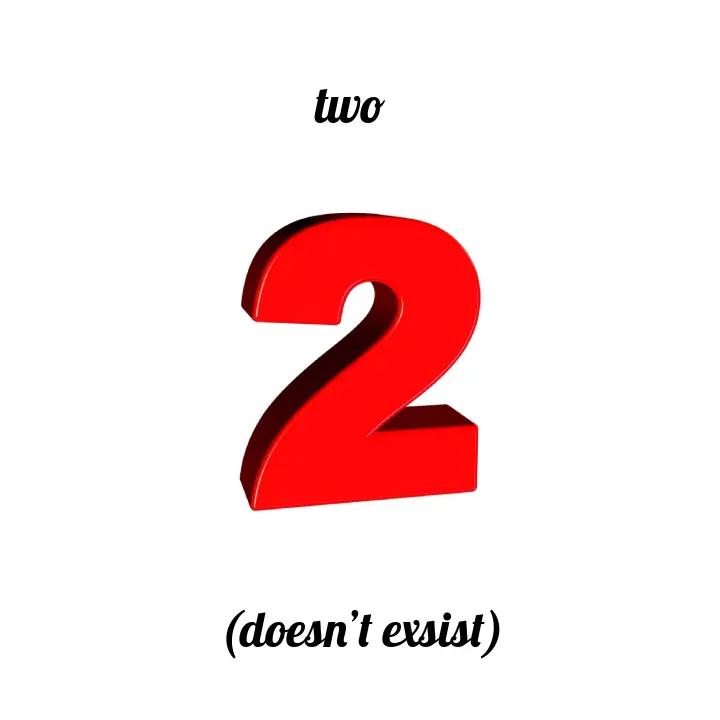
The most interesting of these statements is the second one. It kind of shows that the person you're talking to is aware of the current state of science, yet at the same time falls for this bias. Because saying that 4D is exclusively spacetime is just as meaningless as saying that the number 2 means only those 2 stones, but not 2 joules, not 2 photons, not 2 bits, not 2 x's. The number 2 is a much broader concept than its specific realization as two specific objects.
And claiming that 4D doesn't exist is just as meaningless as claiming that the number 2 doesn't exist. 4D is an abstract concept that doesn't depend on our world.
We have to accept that it can be useful to reason about abstract things that can't possibly exist in our world.
Then where is the line for the existence of abstract objects, if they all both exist and don't exist?
Take i² = -1. Does it exist? No, if we try to find it in the set ℝ. But if we introduce it as a new object, then it exists, and quite beautifully at that.
And can a new object fail to exist in mathematics? Yes, if it leads to contradictions. For example, the machine from the halting problem doesn't exist mathematically, because it contradicts itself. The same goes for the barber paradox.
The word "exist" can be defined by the following list:
- Either it has a concrete realization in the physical world.
- Or it doesn't lead to contradictions.
So if someone tells you that something abstract doesn't exist, remind them that two doesn't exist either.

png